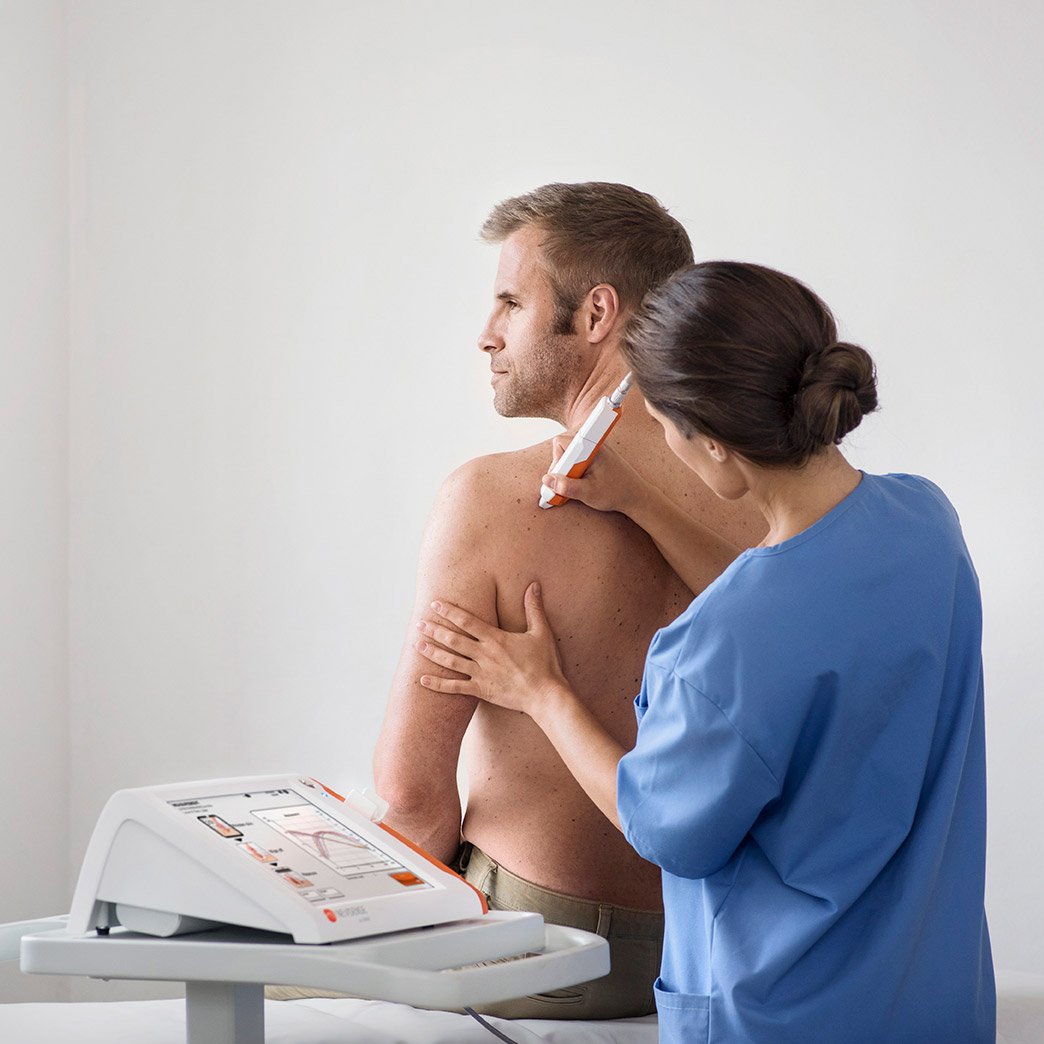
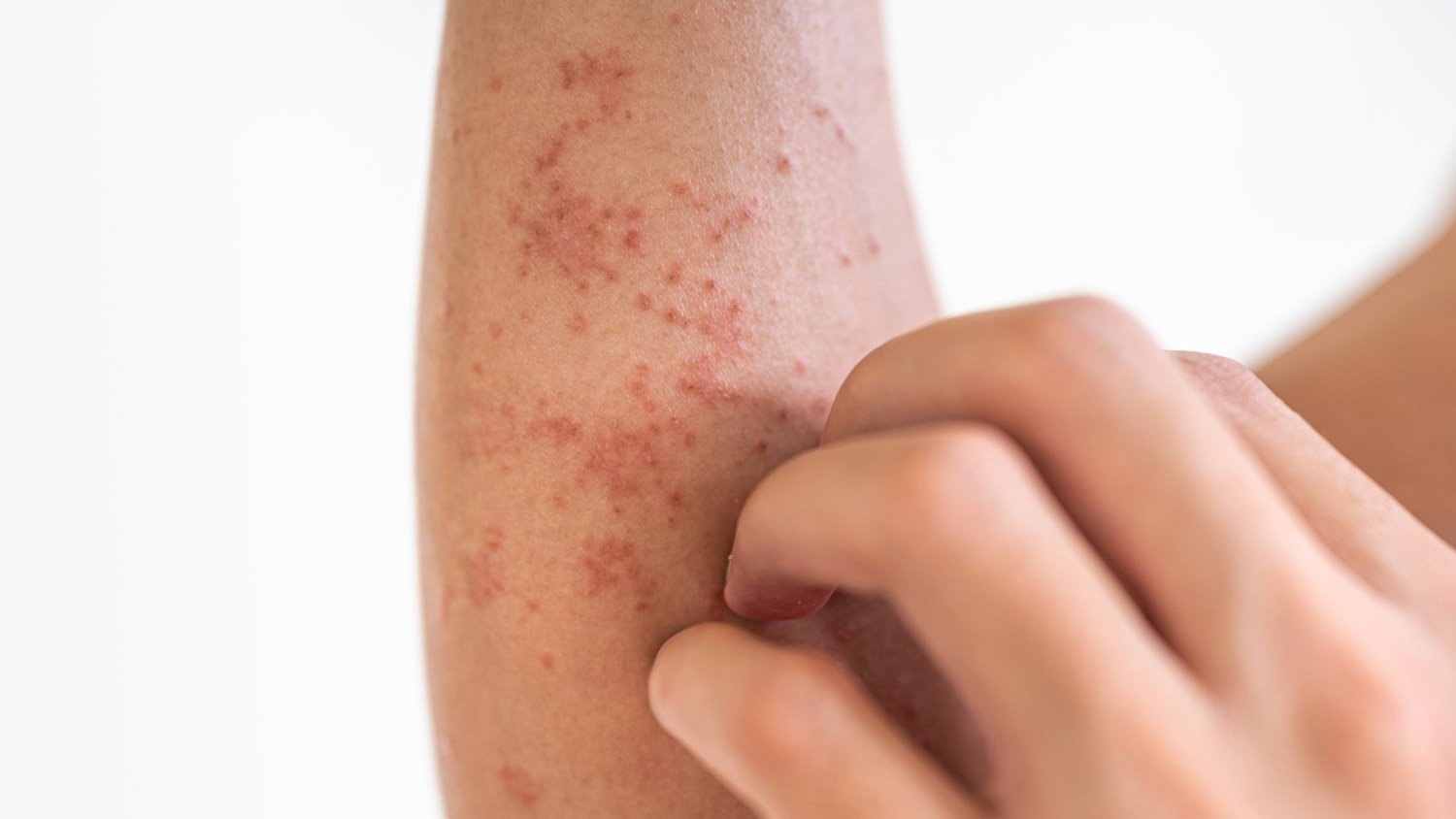
Advancing Skin Barrier Science The skin barrier plays a crucial role in protecting against environmental stressors and maintaining hydration. Nevisense enables objective, non-invasive assessment of barrier function in research settings.
Why Nevisense
Objective, quantitative skin barrier assessment
Track treatment efficacy and barrier recovery over time
Non-invasive, painless and repeatable measurements
Quantitative skin health data
Using EIS, Nevisense measures subtle changes in the skin’s bioelectrical properties that reflect skin structure and barrier integrity. This provides quantitative data for studying conditions such as atopic dermatitis and dry skin, as well as monitoring barrier recovery (Ref. 1).
Measurements across multiple clinically relevant frequencies provide information associated with: • Tissue structure and organization • Cell membrane integrity • Cellular orientation • Tight junction integrity • Moisture compartmentalization • Water loss • Extracellular composition • Changes associated with barrier disruption and inflammation
Tracking treatment efficacy
Clinicians and researchers can monitor how therapies impact barrier status over time. Nevisense has shown potential in multiple barrier-related indications and is currently being used in research areas such as: • Flare prediction • Disease severity • Disease prediction • Ex vivo testing • Treatment efficacy
Supporting dermatology and allergy research Nevisense provides objective, quantitative data on skin-barrier integrity. It supports researchers and healthcare professionals studying how skin conditions, environmental exposures and treatments affect barrier function over time (Ref. 2).
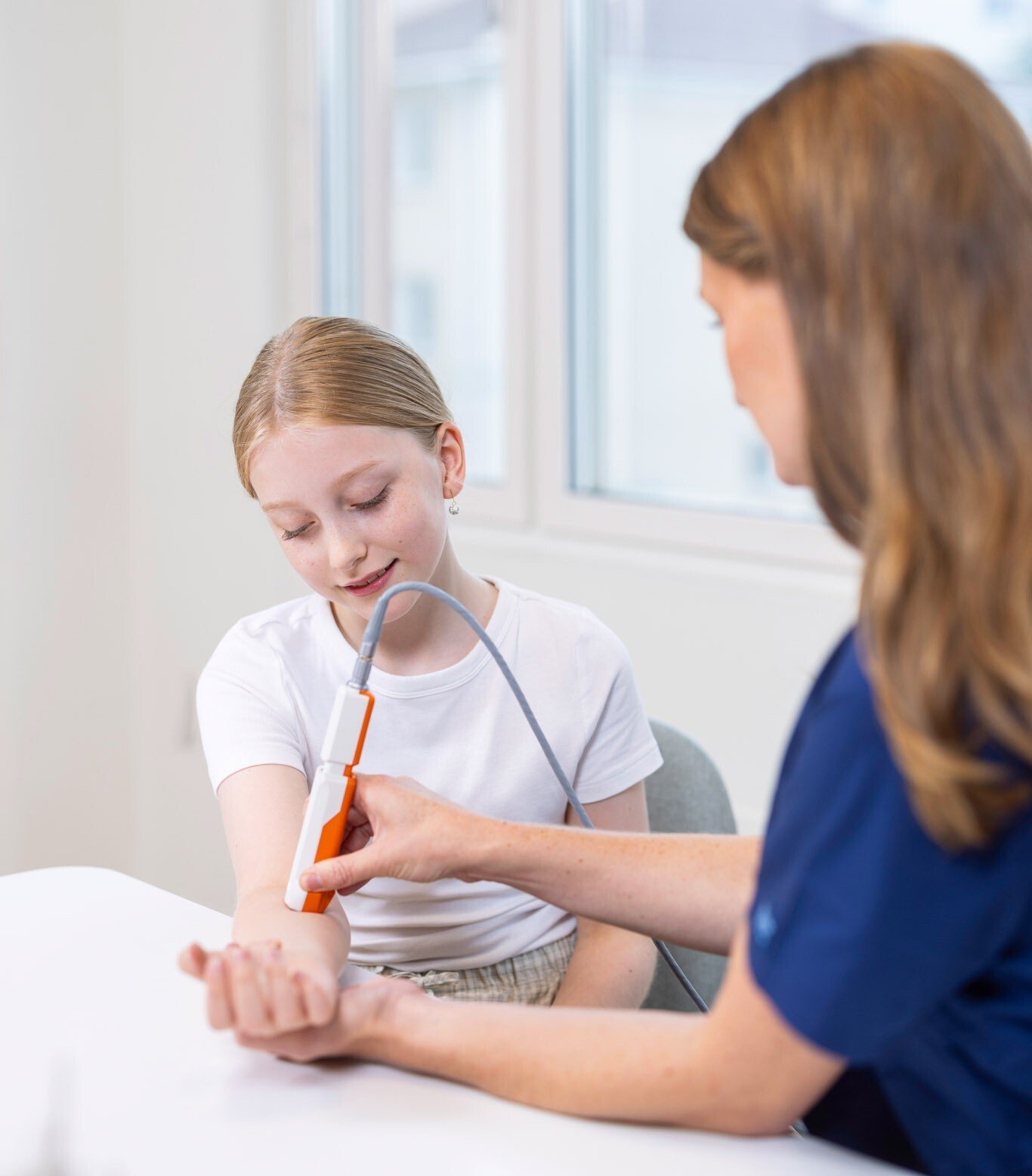
Non-invasive and repeatable testing Nevisense measurements are non-invasive and easy to repeat, ideal for longitudinal studies and sensitive patient populations such as infants (Ref. 3).
Discover how Nevisense can support your research
Book a personalized demonstration, or contact SciBase for more information on Nevisense in a research setting.
References: 1. Changes in skin barrier integrity by electrical impedance spectroscopy during dupilumab treatment on a child with severe atopic dermatitis, Elif Yaycı , Işıl Ezelsoy , Beliz Su Gündoğdu , Betül Büyüktiryaki , Cansın Saçkesen, The Turkish Journal of Pediatrics 2024; Early View: 1-6 https://doi.org/10.24953/turkjpediatr.2024.4902 2. Household laundry detergents disrupt barrier integrity and induce inflammation in mouse and human skin, Arturo O. Rinaldi, Manru Li, Elena Barletta, Paolo D’Avino, Duygu Yazici, Yagiz Pat, Siobhan Ward, Daniel Burla, Ge Tan, Nima Askary, Rasmus Larsson, Jeremy Bost, Huseyn Babayev, Raja Dhir, Nicolas Gaudenzio, Mubeccel Akdis, Kari Nadeau, Cezmi A. Akdis, Yasutaka Mitamura 3. Elevated Neonatal Electrical Impedance Spectroscopy Measurements Are Associated With Atopic Dermatitis in High-Risk Infants" is published in the journal Allergy and can be found through this link: https://onlinelibrary.wiley.com/doi/10.1111/all.70402

 Objective, quantitative skin barrier assessment